Patience is not for sale at any locations.
Small every day: patience for athletes who want it now
Patience is not for sale at any locations. And there's no succeeding at anything without it. The way I build it is Kaizen: very, very small steps that don't take much effort, but still keep her moving forward. Can't do 100 sit-ups a day? Go to 50. Still can't? Go to 25, and build from there. There's no guarantee on how long it'll take. The only guarantee is that eventually it happens.

Okay, so. John Wooden, the UCLA basketball coach, put it this way: when you improve a little each day, eventually big things happen. Make one small improvement a habit every day, and over time you get a big improvement as a habit. Maybe not tomorrow, not the day after. But eventually she looks back and sees she's come a long way. In his words: "Seek the small improvement one day at a time."
I'm a big believer in this. I try to live my life that way. The big change shows up down the road, as the sum of all the small changes and improvements made along the way. And when it happens, it lasts.
It all comes from the chapter on patience, motivation and inspiration in my book. On this site the whole approach is called the Next Play Mindset: a simple way to decide what she wants, do the work, and believe she can get there.
1.Small steps, every day
Kaizen is a way to reach her goals that doesn't involve drastic changes or some huge overhaul of her life.
Instead, she gets there through very, very small steps. Steps that don't take much effort, but still keep her moving forward until she arrives.
This whole thing called life is a kind of process. Everything in it is basically a collection of processes, and she has to move through them with a lot of patience. Without it, she simply gives up and stops walking the road. She won't always understand the road. But being patient is part of the deal.
2.Cut the amount, not the habit
If she needs to, she cuts down the amounts she does each day, so she can move forward safely and finish everything.
If she can't do 100 sit-ups a day, she goes to 50. Still can't? She goes to 25, and builds from there. The goal is that every single day she moves forward on every goal, so the days and the tasks add up over time and she gets there in the end.
When the day ends, she needs to be at 100%. If she's not, she shouldn't be too hard on herself. She finishes the tasks the next day and goes back to being happy with herself.
For her: cut it in half
One printable page. One task she keeps failing to finish, cut in half and in half again, and a week of something positive every morning, with one line on how the day went. Letter size.
3.Keep pushing when it turns into routine
Here's when the difficulties start to show up: when things settle into a routine.
She's walking the road toward the goals she set, maybe she's already hit some of them, and a kind of calm sets in. That's exactly when she has to keep pushing and adjust to the changes. Her "should" has to go back to being a "must."
Still getting a D on the test? Keep studying. Still haven't hit her time on the mile? Keep running. What I tell her in the book: "Trust yourself and keep doing the tasks like it's day one."
4.Start the day with something positive
It doesn't have to be as cheesy as the way I do it: listening to motivational videos every morning while I do the dishes and make lunch.
Most of what those guys say repeats itself and sounds like slogans and clichés. But most of it is positive, and it lets me hear positive things for 30 to 45 minutes every morning.
I actually tested it against days when I didn't listen. On the days I listened, the day was simply more positive. In how I reacted to whatever happened, and in how the day went. It's one of the things that has had the biggest effect on how I handle the everyday hard stuff. For her it can be videos, an audiobook, a talk. Even if it means just trying it for a week.
5.Help her find her role models
It doesn't have to be one person. It can be a collection of people, ideas and events that inspire her on the way to her goals.
A quote, a book, an interview, a talk, a famous figure, or someone in her life: her dad, mom, grandpa, grandma, a friend, a coach. The people I draw inspiration from every day are my grandfather, Michael Jordan, Kobe Bryant, Coach John Wooden, Coach Phil Jackson, Jim Rohn, Tony Robbins, and many others.
I use them in the moments when I'm struggling with the road. When I feel overwhelmed by everything going on around me. That's when I'll listen to an audiobook or a talk, read an article, watch a video that helps, or put on music that calms me down. And then I go back to work. If she wants a page for hers, the inspiration list is ready to print.
Before you talk to her
The road to success isn't a straight line. It starts, and then it bends in all kinds of directions. What counts is that the general direction, over time, points toward the goal. And if it doesn't, you fix it and adjust.
What she says, and what you can say back
Every answer here is a line from my book, from the chapter on patience.
| When she says | You can say |
|---|---|
| "It's taking forever." | "There's no guarantee on how long it'll take. The only guarantee is that eventually it happens." |
| "I can't do all of it." | "Cut the daily amount in half. Then in half again if you need to. Build from there." |
| "I'm still getting a D." | "Keep studying. Trust yourself and keep doing the tasks like it's day one." |
| "I didn't finish everything today." | "Don't be too hard on yourself. Finish the tasks the next day." |
Thirty days that turned into fifteen years
In 1989, Tim Grover sat down with Michael Jordan at his home and laid out a plan to make him stronger. Slowly, while keeping the risk of injury down. He offered to write him a 30-day schedule. Jordan gave him those 30 days. Grover ended up staying for 15 years. He tells the story at the start of Relentless.
Questions parents ask
Do motivational videos really help?
I tested it against days when I didn't listen. On the days I listened, the day was simply more positive. Most of what those guys say repeats itself. But most of it is positive.
Who are your role models?
My grandfather, Michael Jordan, Kobe Bryant, Coach John Wooden, Coach Phil Jackson, Jim Rohn, Tony Robbins, and many others.
What if she's still getting a D?
Keep studying, and keep doing the tasks like it's day one. If the amount is too much, she cuts it down so she can move forward safely, and builds from there.
Is this for boys too?
Yes. The book is for all the girls, at every age. And for the boys too.
The Young Athlete's Mindset & Goals Journal
If she'd rather keep at it on paper for a whole season, it's in my shop. My Action List, with how often each action happens, and 12 weekly pages: plan the week on Sunday night, then check off the list every day. Then the next 90 days, with check-ins at day 30 and day 60.
Free: The Next Play Mini Journal
By the end of the week she has closed the last game with a clear head, picked one thing to work on at practice, and written her plan for the next one. Seven pages, one a day, five minutes a day, written by Coach Isaac in the same words he uses with his own players.
- Day 1, The Reset. Tonight, before she goes to sleep. Three slow breaths, one honest sentence about what happened, a name for the feeling, and the one thing this game is teaching her. Then she closes the game. Tomorrow is a different page.
- Day 2, The Tape. The next morning. Coaches watch the tape the next day, never the same night, because the same night you only see the mistakes. The next day you see the whole game, including what she did right.
- Day 3, My Why. When the why is strong, the how gets easier. She writes down why she plays, clearly enough to say it out loud.
- Day 4, One Focus. She knows what to fix and why it matters. Now she turns it into one small thing she can do at practice this week, and repeats it. That's how real improvement works.
- Day 5, Winter. A sports season works like the seasons of the year, and game season is winter. You can't cancel winter. What you can do is get better at it: stronger physically, stronger mentally, stronger with your feelings.
- Day 6, Believe. Belief isn't magic. It's what she says to herself, over and over, until it's what she thinks. On this page she writes her own lines instead of the ones other people put in her head.
- Day 7, Next Play. Her game plan for the next game. Eyes forward. The season only moves in one direction.
It's free. Leave your email, and the download opens right away, in Letter and A4.
More from the blog
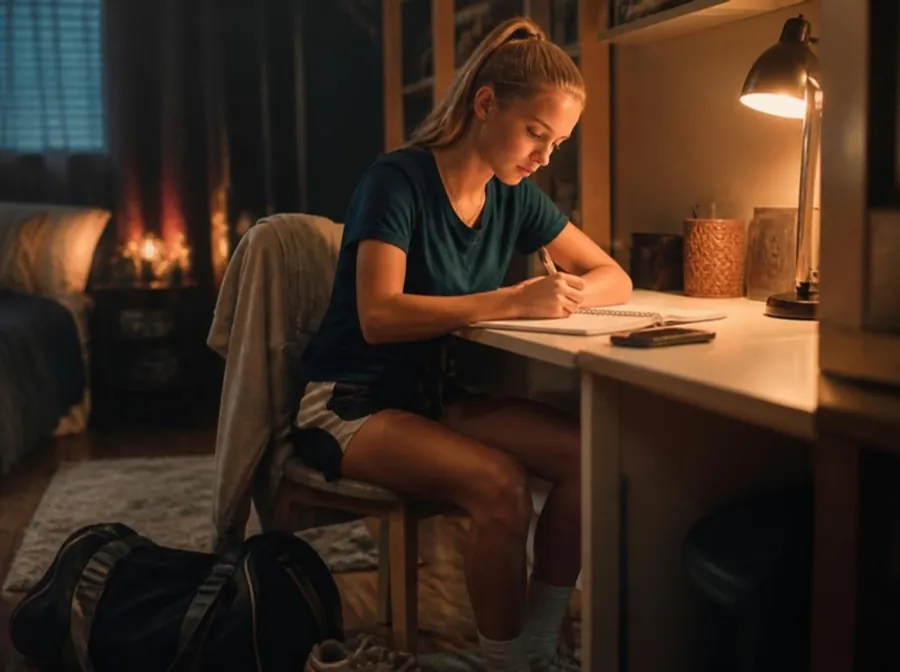
How to motivate your daughter in sports
She wants more from her sport, from school, from herself. And she ends up on Instagram, TikTok and the group chat instead. How to tell what's stopping her, and what you can say back.
October 1, 2026
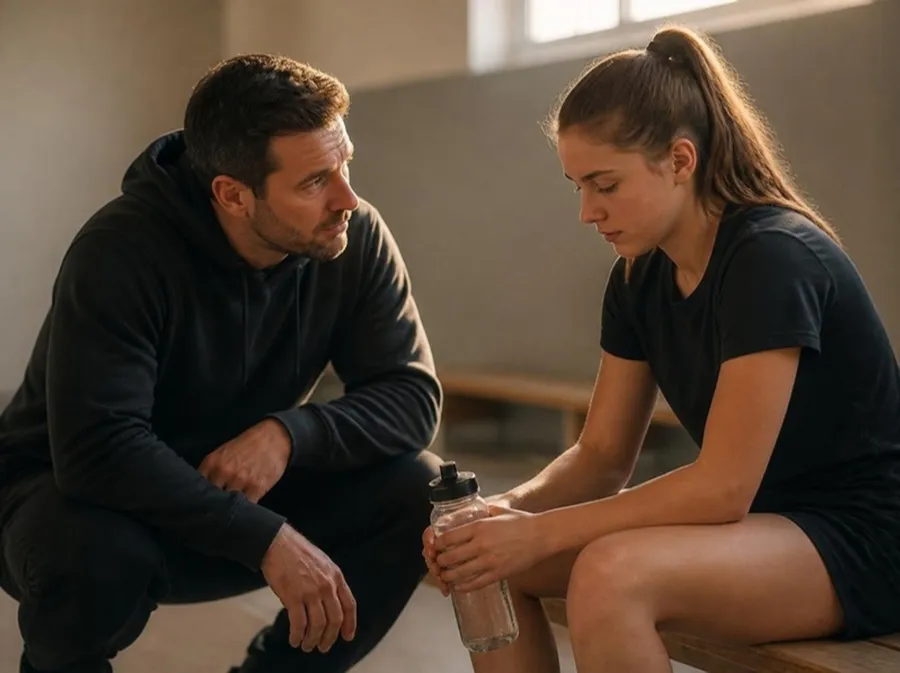
What to do when your child makes excuses
"I have no energy." "My stomach hurts." "Practice isn't fun." A coach hears these every week. Here's what he says back, and why he doesn't hand her the escape hatch right away.
October 11, 2026
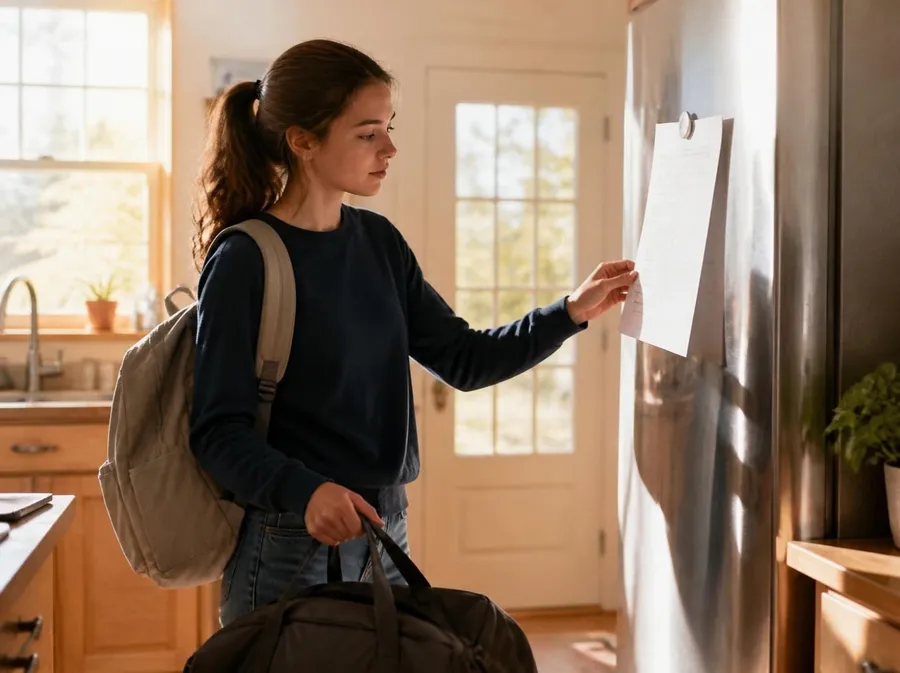
How to balance school and sports as a student athlete
School, practice, homework, friends. By the end of the day she's tired, with that feeling of "I didn't get to it." Where that feeling comes from, and the six questions that plan her day.
October 11, 2026
Based on chapter 12 of From Gazelle to Lioness by Coach Isaac, where the John Wooden line is quoted. Tim Grover tells the story of his first meeting with Michael Jordan in Relentless.