Fail to plan, plan to fail.
How to balance school and sports as a student athlete
Every day has 24 hours. 1,440 minutes. When she feels like she missed it and didn't get to it, that feeling usually comes from one place: there's no clear, written plan. It's all in her head, in a mess. So she plans tomorrow tonight, before bed. Her goals for the day, what has to get done, what she's focusing on. Then hours and minutes. On Sunday night, the whole week.

Okay, so. There's one thing about time I want my players to get now, while they're still young.
Time is more important than money. Run out of money, you can make more. Run out of time, that's it.
We can't control time. But choosing what to do with it? That part is 100 percent ours.
One of the ways I describe the Method is a smart time management system. On this site it's called the Next Play Mindset: a simple way to decide what she wants, do the work, and believe she can get there.
1.Count the minutes
It starts with one simple fact.
Every day has 24 hours. 1,440 minutes. 86,400 seconds. If she wants to reach her goals, she has to find a way to use that time well.
Using it well means that every day she does the things she needs to do, has to do, and wants to do, so she reaches her goals and does her job in every role she has.
2.Plan tomorrow tonight
Every moment of my day is planned carefully, ideally the night before.
Six questions. She answers them, and her day is planned.
- What are my goals for today? What do I want to get out of this day?
- What do I have to get done today to call it a good day?
- What am I focusing on today? You can't do everything in one day.
- How will I know, at the end of the day, that I used it right?
- What am I doing with every minute of the day, so I use the time I've got?
- And do all of this the night before, or early in the morning.
Some nights, with everything she has to get done, her head just won't sort it out. That "I'm not going to get anything done" feeling. Laying it all out, hour by hour, puts everything in its place. And suddenly she can get it all done, even though it's a lot.
For her: the Planned Daily Schedule
The same page I put at the back of my book. Goals for the day, hours and minutes, and one honest line at the end. Letter size.
3.Put the fixed stuff in the calendar
I keep my fixed, recurring stuff as blocks in a calendar I already have anyway. Google Calendar.
For a student athlete, that's school and practice.
Then she takes the tasks she needs to do today and puts them into hours and minutes, around those blocks. In the book I call that page the Planned Daily Schedule.
4.Plan the week on Sunday night
Same six questions. Just swap "today" for "this week."
She does it Sunday night, or early Monday morning.
Some things don't fit into one day. Spread over a week, they do. And some things don't happen every day. They happen once or twice a week. Those go into the week, in an organized way.
Later it keeps going. The month, planned at the end of the month before. Then the quarter, 90 days. Then the year.
5.One honest line at the end of the day
When the day is over, she sums it up.
Did she use the day right? One honest line.
Planning her day like this is what lets her walk into the next one with confidence. And feel that she did something today. That she didn't waste her time doing nothing.
Before you talk to her
Before you hand her the six questions, answer one yourself. What are you focusing on today? You can't do everything in one day.
What she says, and what you can say back
Every answer here is a line from the book, from the chapters on time and on why we get stuck.
| When she says | You can say |
|---|---|
| "I didn't get to it." | "Tonight, before bed, plan tomorrow." |
| "I've got a million things to do. Who's got time for this?" | "We all have 24 hours in a day. What we put into that time is what decides what we'll have in life." |
| "I'm not going to get anything done." | "Laying it all out, hour by hour, puts everything in its place." |
Choose what you give up
Kobe Bryant's advice in The Mamba Mentality, in short: decide for yourself what you're going to give up, so life doesn't decide for you.
Questions parents ask
I work long days. Is this for us too?
The reason to plan is exactly to create more time, in places you didn't think you had any. And to focus on the things that matter, instead of the usual time-wasters.
How long does it take every day?
A few minutes, to update what she did. Setting it up the first time takes longer, depending on how much free time she has.
Does she need an app?
Google Calendar for the fixed stuff. For the rest, ChatGPT, or whatever she's using, can build a daily schedule by the hour in a minute. The building is the easy part. Filling it in every day is hers.
Is this for boys too?
Yes. The book is for all the girls, at every age. And for the boys too.
The Student Athlete Planner
If she'd rather do this on paper, it's in my shop. 12 undated weeks where school and sport sit on one page, plus a quarter goal for each. Sunday night, she plans the week. Every night, four boxes.
Free: The Next Play Mini Journal
By the end of the week she has closed the last game with a clear head, picked one thing to work on at practice, and written her plan for the next one. Seven pages, one a day, five minutes a day, written by Coach Isaac in the same words he uses with his own players.
- Day 1, The Reset. Tonight, before she goes to sleep. Three slow breaths, one honest sentence about what happened, a name for the feeling, and the one thing this game is teaching her. Then she closes the game. Tomorrow is a different page.
- Day 2, The Tape. The next morning. Coaches watch the tape the next day, never the same night, because the same night you only see the mistakes. The next day you see the whole game, including what she did right.
- Day 3, My Why. When the why is strong, the how gets easier. She writes down why she plays, clearly enough to say it out loud.
- Day 4, One Focus. She knows what to fix and why it matters. Now she turns it into one small thing she can do at practice this week, and repeats it. That's how real improvement works.
- Day 5, Winter. A sports season works like the seasons of the year, and game season is winter. You can't cancel winter. What you can do is get better at it: stronger physically, stronger mentally, stronger with your feelings.
- Day 6, Believe. Belief isn't magic. It's what she says to herself, over and over, until it's what she thinks. On this page she writes her own lines instead of the ones other people put in her head.
- Day 7, Next Play. Her game plan for the next game. Eyes forward. The season only moves in one direction.
It's free. Leave your email, and the download opens right away, in Letter and A4.
More from the blog

How to motivate your daughter in sports
She wants more from her sport, from school, from herself. And she ends up on Instagram, TikTok and the group chat instead. How to tell what's stopping her, and what you can say back.
October 1, 2026
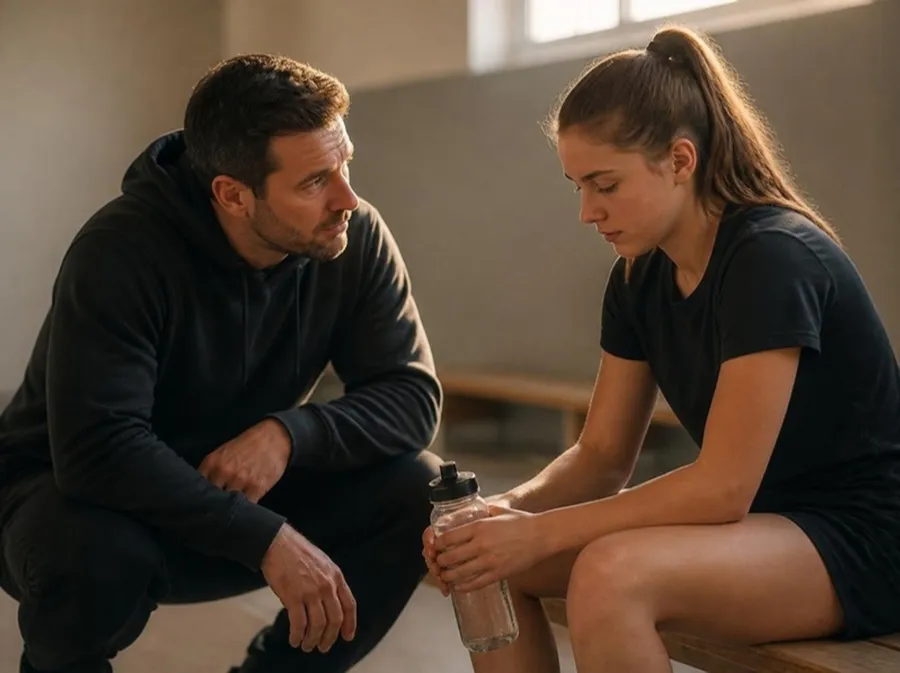
What to do when your child makes excuses
"I have no energy." "My stomach hurts." "Practice isn't fun." A coach hears these every week. Here's what he says back, and why he doesn't hand her the escape hatch right away.
October 11, 2026
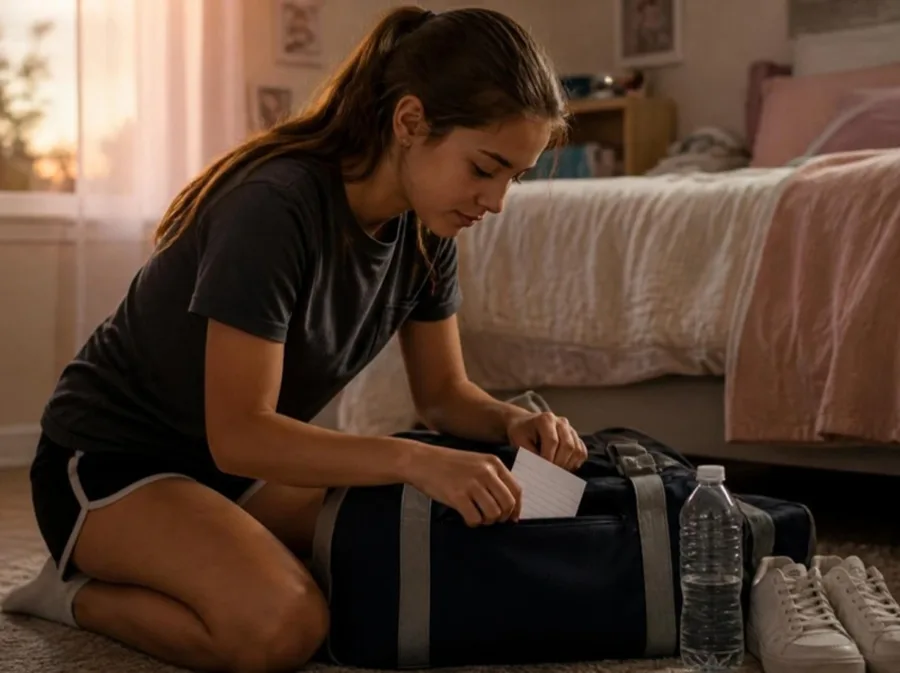
Goal setting for young athletes
She has a list of what she wants. Now what? The six rules for writing each goal, how she picks ten for this year, and why every goal gets three actions and a page of reasons.
October 11, 2026
Based on chapters 2, 6, 7, 18 and 19 and the Planned Daily Schedule page of From Gazelle to Lioness by Coach Isaac. The idea of choosing what to give up is Kobe Bryant's, from The Mamba Mentality.