Everyone is one of a kind.
One of a kind: helping her find her own style
Everyone is one of a kind. Everyone is special. Every one of us has a whole world of our own: our traits, our ideas, how we behave, how we express ourselves. She already has a style. The work is to understand what exactly it is, and bring it to the highest level she can. She asks herself 8 questions, collects lines that fit her, says them her own way, and learns from people whose style she likes.

I always tell my girls, "Everyone is one of a kind. Everyone is special." Truth is, I got that from a 4th grader I coached.
My shirt said "One of a Kind" on it. He read it and explained it back to me, in his own words: everyone is one of a kind, and everyone is special. Which is a pretty great way to put it.
It means every one of us has a whole world of our own. Our traits, our ideas, our thoughts, how we behave, how we express ourselves, and so on. Part of improving her life is taking that "style" of hers and bringing it to the highest level she can, and wants to.
It all comes from the chapter on behavior and style in my book. The whole approach is what I call the Method: a simple way to decide what she wants, do the work, and believe she can get there.
1.She already has one
Okay, so how does she build a style of her own? First of all, she understands she already has one.
I mean, she already has her own way of understanding things and expressing them, to herself and to the outside world. What she needs, as a serious student, is to want to understand what exactly that way is.
And if there's something in there, in her style, that she wants to improve, she does the "work" it takes to improve it. Self-improvement has one more piece in it, and it's a part of her ability to succeed that she can't separate out. Style.
2.Ask the 8 questions
Here are the questions she asks herself on the way to figuring out what her style is.
- Who am I?
- How do I talk? How do I sound?
- What do I think, say, and do in different situations, and does it fit the person I want to be?
- How do I want to sound, look, and act around people, in my best version?
- Do my knowledge and my vocabulary make that possible?
- Who are the people I can learn from about how to look, think, talk, and act?
- What can I do to get better at how I come across?
- What do I need to learn to improve my "style"?
Once she understands how she thinks, how she talks and sounds, how she learns, and how she acts toward herself and toward others, it's a lot easier to make progress. She simply understands herself better. And then she understands better what she wants, or needs, to improve. She can put all of this into her journal, and learn as she goes what she needs to work on.
For her: my style page
One printable page. The 8 questions with room to answer, the lines she's collecting, and one person whose style she'd like to learn from. Letter size.
3.Have her collect lines that fit her
Every time she runs into a line that fits her, she can adopt it.
Me, every time I run into a line like that, if it fits me, I adopt it. It can come from a song, a movie, a book, a talk, or even a 4th grader whose way of putting things I just connect with. I found that I simply remember the "material" better that way.
So she starts collecting. Every line she hears that fits her, she writes down.
4.Have her say it her own way
The idea is to take the line and make it hers, and say it the way she expresses herself.
The way I put it in the book: "The idea is to take the 'line' and make it mine." To pass the information along in a way she understands, and in a way she thinks the other side can connect to as well.
Humor does the job a lot of the time. Even cheap humor (dad jokes). People tend to remember the joke, even if it wasn't all that funny.
5.Help her learn from someone whose style she likes
If there's someone whose style she'd like to adopt, she can learn from them and build herself a style that's special, and different from what she has right now.
That's what they call "improving." Here's the homework from the book. She picks one person whose style she'd like to learn from. What exactly do they do that she likes? She writes it down.
The further she gets with self-improvement, the better her style gets. And in the end, people will recognize her by it.
Before you talk to her
Anyone can build a style that's unique to who she is. It takes knowing yourself deeply. Who you are, and how you bring your ideas across, to yourself and to others. That goes for you too.
What she says, and what you can say back
Every answer here is a line from my book, from the chapter on behavior and style.
| When she says | You can say |
|---|---|
| "I want to be like her." | "What exactly does she do that you like? Write it down. You can learn from her and build a style that's yours." |
| "I don't know who I am." | "Answer the 8 questions in your journal. Take your time. This is where you find out what your style is." |
| "I heard a line I love." | "Write it down, and say it your own way. Take the line and make it yours." |
Less chatter, more ladder
Me, I'm big on humor, and on talking in rhymes. The way I express things, to myself and to other people, is through short and catchy lines. Sometimes with a joke, sometimes with some rhymes.
Say I want practice to be a little quieter. I'll say something like "less chatter, more ladder," or "less yapping, more lapping." My players get what I meant, and they remember what I said, because it's so simple and catchy. And the first time I say it, it sounds a little funny, too.
Questions parents ask
Isn't copying someone bad?
If there's someone whose style she'd like to adopt, she can learn from them and build herself a style that's special, and different from what she has right now. That's what they call improving.
Why rhymes?
They make things stick better. My players get what I meant, and they remember what I said, because it's so simple and catchy.
Where does she write all this?
In her journal. She learns as she goes what she needs to work on.
Is this for boys too?
Yes. Everyone is one of a kind. The book is for all the girls, at every age. And for the boys too.
From Gazelle to Lioness
The 8 questions come from my book. Decide what you want. Act in that direction. Believe you'll get there. It's written to her, the way I talk to my own players, and it works like a workbook. There are tasks.
Free: The Mini Journal
By the end of the week she has closed the last game with a clear head, picked one thing to work on at practice, and written her plan for the next one. Seven pages, one a day, five minutes a day, written by Coach Isaac in the same words he uses with his own players.
- Day 1, The Reset. Tonight, before she goes to sleep. Three slow breaths, one honest sentence about what happened, a name for the feeling, and the one thing this game is teaching her. Then she closes the game. Tomorrow is a different page.
- Day 2, The Tape. The next morning. Coaches watch the tape the next day, never the same night, because the same night you only see the mistakes. The next day you see the whole game, including what she did right.
- Day 3, My Why. When the why is strong, the how gets easier. She writes down why she plays, clearly enough to say it out loud.
- Day 4, One Focus. She knows what to fix and why it matters. Now she turns it into one small thing she can do at practice this week, and repeats it. That's how real improvement works.
- Day 5, Winter. A sports season works like the seasons of the year, and game season is winter. You can't cancel winter. What you can do is get better at it: stronger physically, stronger mentally, stronger with your feelings.
- Day 6, Believe. Belief isn't magic. It's what she says to herself, over and over, until it's what she thinks. On this page she writes her own lines instead of the ones other people put in her head.
- Day 7, Next Play. Her game plan for the next game. Eyes forward. The season only moves in one direction.
It's free. Leave your email, and the download opens right away, in Letter and A4.
More from the blog
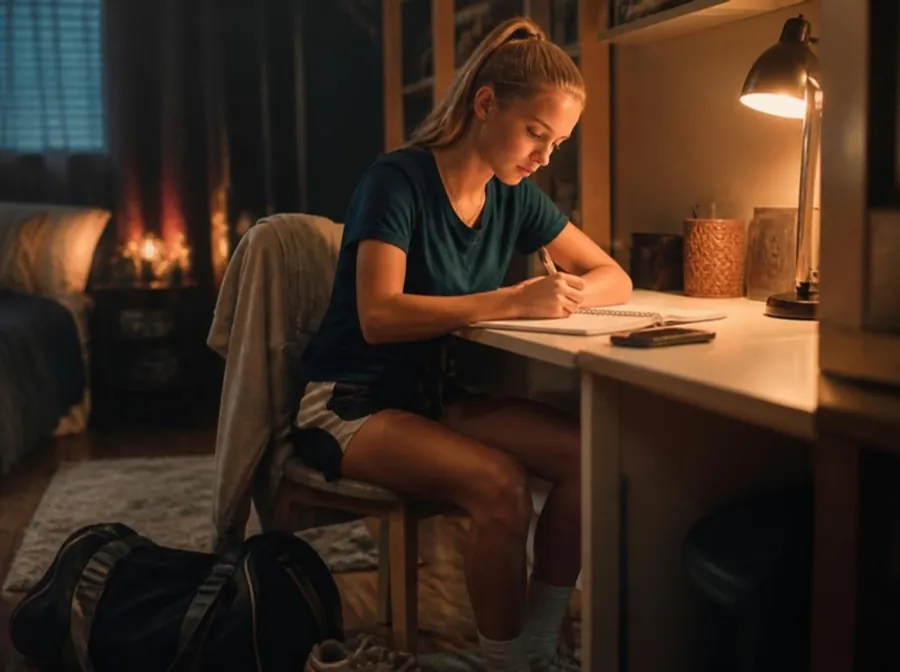
How to motivate your daughter in sports
She wants more from her sport, from school, from herself. And she ends up on Instagram, TikTok and the group chat instead. How to tell what's stopping her, and what you can say back.
October 1, 2026
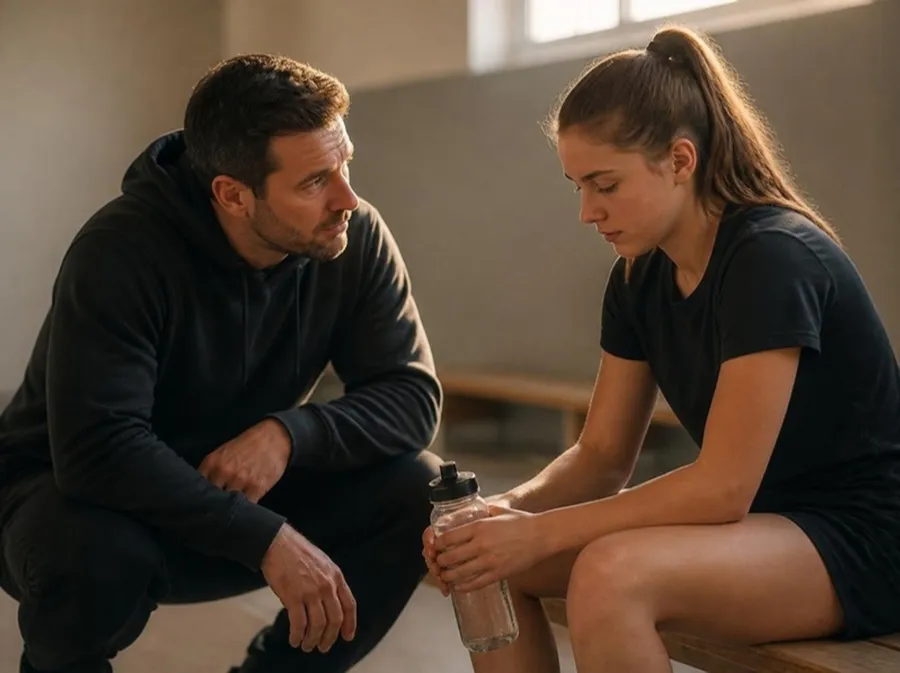
What to do when your child makes excuses
"I have no energy." "My stomach hurts." "Practice isn't fun." A coach hears these every week. Here's what he says back, and why he doesn't hand her the escape hatch right away.
October 11, 2026
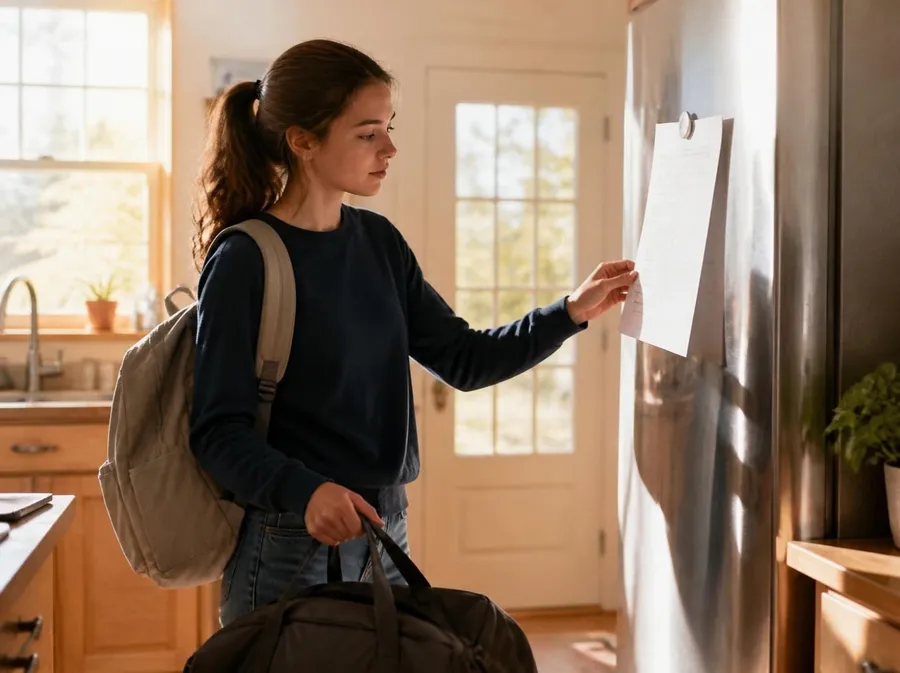
How to balance school and sports as a student athlete
School, practice, homework, friends. By the end of the day she's tired, with that feeling of "I didn't get to it." Where that feeling comes from, and the six questions that plan her day.
October 11, 2026
Based on chapter 16 of From Gazelle to Lioness by Coach Isaac.