One coach's Achilles story.
Mentally coming back from injury
When I tore my Achilles at 38, the first thing I did was decide I was getting through it. Then small steps, every day. My first day of running was about a third of a mile, half walking, half running, and I stopped four times. On day three, no stops. Then I showed up to rehab as the person I wanted to be. Decide, act, believe. The same three steps work for her comeback.
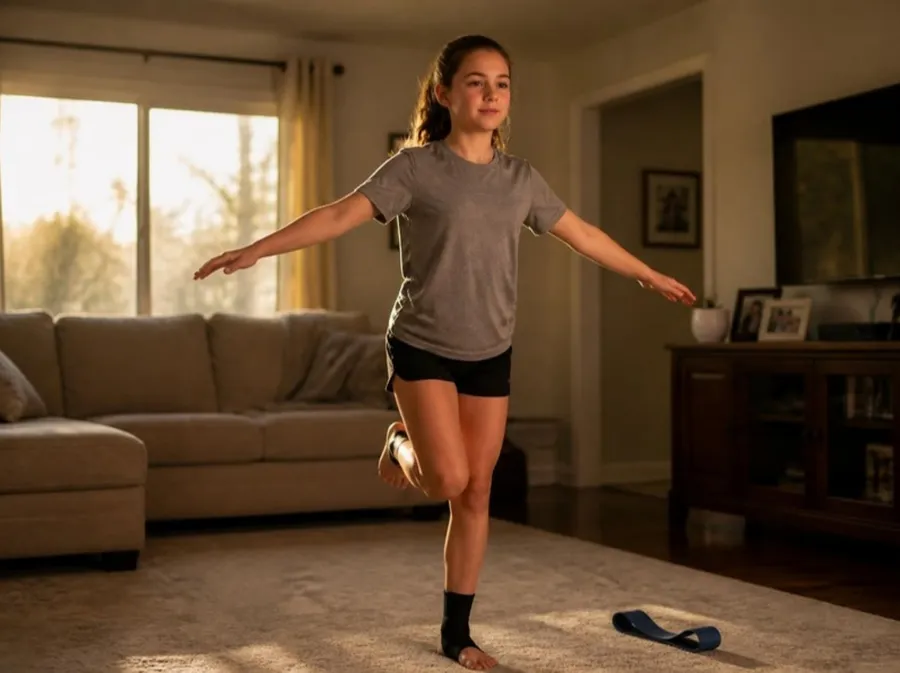
Okay, so. League game, November 30, 2016, around 9:15 p.m. I took a shot, it hit the post, I jumped for the rebound, and it felt like someone kicked me hard in the back of the leg. I looked up. The other team was ten feet away, looking at me funny, like, what happened to him?
It didn't hurt. So I hopped on one leg to the bench, waited for the game to end, and even sat with the guys afterward. I called my wife. She told me to call my physical therapist. I said, tomorrow morning. Two minutes later my PT called me and told me to get to the ER.
I'd torn my Achilles tendon. Two months in a cast, then a boot. Four months on crutches. I was hurt physically and mentally.
Getting out of that injury is the story the whole Method is built around. On this site it's called the Next Play Mindset: a simple way to decide what she wants, do the work, and believe she can get there.
1.Decide you're getting through it
Before any plan, there was a decision.
To show you how bad this injury is: in the ER I asked the orthopedic doctor, "People come back from this, right? You can play again?" His answer, about as pessimistic as it gets: "Ahh, in principle, yes."
So I went and looked at NBA players, to me the greatest athletes there are. One study followed 18 NBA players who tore their Achilles, over 23 seasons. Seven never played in the NBA again. Three came back for one season. Every one of them was younger than me.
I still decided I was getting out of this injury. All the way.
The first move was small. If you're in a hole, first of all, stop digging. For me that meant keeping the basics going every day, and seeing where to go from there. Then I opened an old spreadsheet and wrote down what I wanted and the actions that would get me there. Goal number one: get out of this injury.
2.Start smaller than small
I started working the Kaizen way. Every day, a little more than the day before.
The first day I tried to run, I did about a third of a mile, half walking, half running. It hurt, and I stopped about four times. The second day, I stopped twice. The third day, no stops. Day four, almost half a mile. Day five, just over half a mile.
After every run I went home for weights and leg exercises, and those grew a little every day too. When I got to about a mile and a quarter, I started adding a third of a mile a day. My goal was six miles. I didn't hit it. I got to five and a half, a full hour of running. Every single day, weekends included, for a month and a half.
Small steps don't take much effort, and they still move you forward. Her first step can be as small as mine was.
For her: The Next 90 Days
The page from the back of my book. One goal, one date, one intermediate goal halfway there, and what she does every day. Letter size.
3.Do what you can, not what the pros do
My physical therapist recommended sport-specific rehab sessions with a rehab trainer.
Each one is about an hour of balance, strength, jumping, sprints and changes of direction, against resistance. Pretty much every leg exercise in the world. When I asked how many I needed, she said a pro in the top league does about 12.
I thought, there's no way I'm doing 12 of those. I'm 38 years old, for crying out loud.
I did 4. They were enough for the rehab trainer to clear me.
It's the same thing I tell my players at practice when something hurts. "Do what you can." Not what a pro does. What she can do today.
4.Show up as the person you want to be
While I was looking at NBA players, I found one name that gave me some motivation.
Kobe Bryant. He tore his Achilles in April 2013, got up, made his two free throws, and walked off. Eight months later, at 35, he was back on the court. In his last game, at 37, he scored 60 points.
Every time it got hard, I'd say something like, "Only me and Kobe Bryant can come back from this injury." Then I'd laugh at myself.
That's about when I put everything into high gear. I decided to show up to rehab as the person I want to be. I wasn't just going to finish rehab. I was going to finish it so that I'd be an example for whoever comes after me, and come back fitter than I was before the injury.
Not easy. And every day, I finished the run.
5.The day you get the green light
On August 15, 2017, my physical therapist cleared me to practice with my team again.
I was on cloud nine. At the first practice I was as excited as a kid at his first practice. I wasn't very good, and it didn't matter one bit.
About three weeks later, our first scrimmage was set. Same gym where I got hurt. September 12, 2017, 9:00 p.m., and I was in the starting lineup. Pretty scary.
I played about 40 minutes, scored once, and wasn't great on defense or offense. The achievement, for me, was getting myself out on the court. Scared and excited at the same time. I finished tired, sore and very happy.
I've had more injuries since. Not as bad as an Achilles, but not simple either. I got through every one of them the same way: time, hard work, a professional medical team that cares, and wanting to play. And after that comeback I understood the method works, so I started using it on all my other goals.
Before you talk to her
She owns this comeback. The best thing you can ask her is "What was your small step today?" Then listen. And keep the medical calls with the professionals.
What she says, and what you can say back
The first three answers are from my list of what the girls on my team say at practice, and what I say back. The last one is from the first chapter of the book.
| When she says | You can say |
|---|---|
| "My leg hurts." | "Mine too. Do what you can." |
| "I can't." | "You can. I believe in you. Believe in yourself." |
| "I'm not getting it." | "Try again. That's what practice is for." |
| "I'm scared." | "It's okay to be scared. It's not okay to let the fear win. I'm right here with you." |
One day at a time
John Wooden, the UCLA basketball coach, put Kaizen in one line: "Seek the small improvement one day at a time."
Questions parents ask
Is this medical advice?
No. The stories and methods here come from my own experience as a coach and an athlete. They are not a substitute for professional medical, psychological, or nutritional advice. The body is her medical team's call.
How long did your comeback take?
I got hurt on November 30, 2016. I was cleared on August 15, 2017. About nine months.
What if she's scared to go back?
Mine was a scrimmage in the same gym where I got hurt. Pretty scary. For me, the achievement was getting out on the court at all.
What if she has a bad day?
When the day ends, she should be at 100%. If she's not, she shouldn't be too hard on herself. She finishes the tasks the next day, and goes back to being happy with herself.
Is this for boys too?
Yes. The book is for all the girls, at every age. And for the boys too.
The Athlete's Comeback Journal
If she's out with an injury, I built a journal out of my own comeback, and it's in my shop. The Kaizen Log: tiny improvements, two weeks to a page, so the progress stops hiding. The Reset: a 5-step routine for the bad days. And the first game back, planned like a game day.
Free: The Next Play Mini Journal
By the end of the week she has closed the last game with a clear head, picked one thing to work on at practice, and written her plan for the next one. Seven pages, one a day, five minutes a day, written by Coach Isaac in the same words he uses with his own players.
- Day 1, The Reset. Tonight, before she goes to sleep. Three slow breaths, one honest sentence about what happened, a name for the feeling, and the one thing this game is teaching her. Then she closes the game. Tomorrow is a different page.
- Day 2, The Tape. The next morning. Coaches watch the tape the next day, never the same night, because the same night you only see the mistakes. The next day you see the whole game, including what she did right.
- Day 3, My Why. When the why is strong, the how gets easier. She writes down why she plays, clearly enough to say it out loud.
- Day 4, One Focus. She knows what to fix and why it matters. Now she turns it into one small thing she can do at practice this week, and repeats it. That's how real improvement works.
- Day 5, Winter. A sports season works like the seasons of the year, and game season is winter. You can't cancel winter. What you can do is get better at it: stronger physically, stronger mentally, stronger with your feelings.
- Day 6, Believe. Belief isn't magic. It's what she says to herself, over and over, until it's what she thinks. On this page she writes her own lines instead of the ones other people put in her head.
- Day 7, Next Play. Her game plan for the next game. Eyes forward. The season only moves in one direction.
It's free. Leave your email, and the download opens right away, in Letter and A4.
More from the blog

How to motivate your daughter in sports
She wants more from her sport, from school, from herself. And she ends up on Instagram, TikTok and the group chat instead. How to tell what's stopping her, and what you can say back.
October 1, 2026
What to do when your child makes excuses
"I have no energy." "My stomach hurts." "Practice isn't fun." A coach hears these every week. Here's what he says back, and why he doesn't hand her the escape hatch right away.
October 11, 2026
How to balance school and sports as a student athlete
School, practice, homework, friends. By the end of the day she's tired, with that feeling of "I didn't get to it." Where that feeling comes from, and the six questions that plan her day.
October 11, 2026
Based on Coach Isaac's own comeback, as he tells it in his workshop, and on chapters 1, 11, 12 and 20 and The Next 90 Days page of From Gazelle to Lioness. The NBA numbers are from Garg, Amin, Old and colleagues, presented at the AAOS Annual Meeting in 2013 (summary). Kobe Bryant's injury and return: Sports Illustrated; his last game: The Mamba Mentality. The John Wooden line is from chapter 12.